
Baby Boomers: Re-Thinking Traditional Healthcare in the United States

In our previous blog outlining millennials and U.S. healthcare much of the focus centered on the advanced technologies and conveniences millennials have come to expect. However, while U.S. healthcare is rapidly evolving in the technological sphere, the medical community cannot forget that baby boomers continue to expect a higher amount of traditional guidance, feedback, and one-on-one contact with their medical professionals.
It’s Traditional
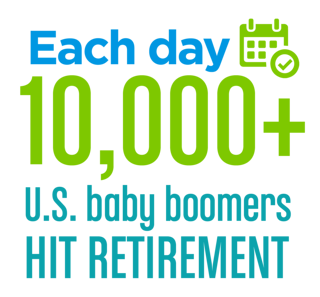
Each day, more than 10,000 U.S. baby boomers hit retirement age (1). The baby boomer generation is saturating the healthcare arena, and this demographic is not as keen on technology as millennials. In fact, among all the patient demands, having an actual doctor – that listens – ranks highest on the baby boomers’ list of what satisfies them most in their healthcare (2).
We already know that millennials utilize online medical resources and communities on a regular basis. For baby boomers, the bulk of their support – especially when faced with multiple health issues and/or dealing with multiple specialists – is found in family members.
It Takes a Village
Here’s the interesting thing about baby boomers: they are very active participants in their healthcare. What’s more, while they do expect the traditional services – such as one-on-one conversations with doctors – they’re not necessarily adverse to utilizing technology to shore up their healthcare.
Add in the additional support this generation receives from more tech-savvy family members, and there are suddenly many more opportunities to cater to this demographic – without alienating the millennial’s expectation for state-of-the-art technology.
Cause and Effect
The sheer number of aging baby boomers entering the healthcare system can be daunting. In fact, with fewer children being born today, some physicians, pharmacies, and other organizations might be tempted to stick with more traditional approaches and put off technological upgrades that, at first glance, look to benefit the smaller millennial generation. However safe that approach may feel, it would nonetheless be a mistake.
Mark Twain said: “Necessity is the mother of taking chances.” Technology is going to keep advancing forward. Healthcare can either move with it, or get left behind. So why not find out how to move with it, while securing benefit for everyone involved?
What Can Be Done
As with our last blog, technology and convenience appear to be the key to capturing, and keeping, the attention of consumers in the U.S. healthcare markets. For baby boomers, focus needs to be on patient-physician relationships first, and spreading out into convenience and value from that point. Here are a few tips to employ, which may help make your healthcare organization more appealing to baby boomers (while not alienating millennials):
Pharmacists:
- Remain open to emerging technologies that can help streamline the prescription process – no matter which generation your customer is a member of, they’ll be open to additional conveniences when getting their prescriptions filled
- Train team members to take the time to speak with customers who come into the store. Recognizing what your customers expect, be that information on emerging technologies, or simply taking the time to review dosage instructions on prescription or over-the-counter medication, can go a long way in ensuring customer engagement and loyalty
- Make your staff available to answer questions customers may have
- Consider offering a battery of low-cost vaccinations geared towards older adults such as:
- Continue to offer discounts. Many baby boomers are on a fixed-income and are very receptive to saving money. The additional value can help ensure customer loyalty from this demographic
Independent Pharmacies:
○ Influenza (Flu)
○ Shingles (Herpes Zoster)
○ Pertussis (Whooping Cough)
○ Pneumococcal disease (Pneumonia)
Older generations usually take more than one medication. Consider adopting a medication synchronization program for your customers who take more than one medication. This convenience will appeal to both millennials and baby boomers
Closing Thoughts
Trying to cater to two different types of customer can be difficult, especially when their cultures are so drastically different – but it’s not impossible. In fact, with just a bit of thoughtful application, there are many technological advances in healthcare today that can be applied across the generational spectrum; it all just depends on how that technology is presented.
Keep an open mind to emerging technologies, consider how they can aid your customer – as well as your organization, and you may just find a bit of solid ground in our ever-changing healthcare market.
Has your pharmacy adopted any emerging technologies? Which technologies have you brought on and what changes – positive or negative – have you experienced? We’d love to know and may even use those experiences in future topics. If you’d like to add your experience, please contact brosario@alliantrx.com.
Be sure to follow this blog for more tips, insights and bulletins that can help grow your pharmacy and save you money – all from your partners at AlliantRx.
Sources: